2013 CA State

Gold Standard Games/Dave & Busters Air Hockey Championships:

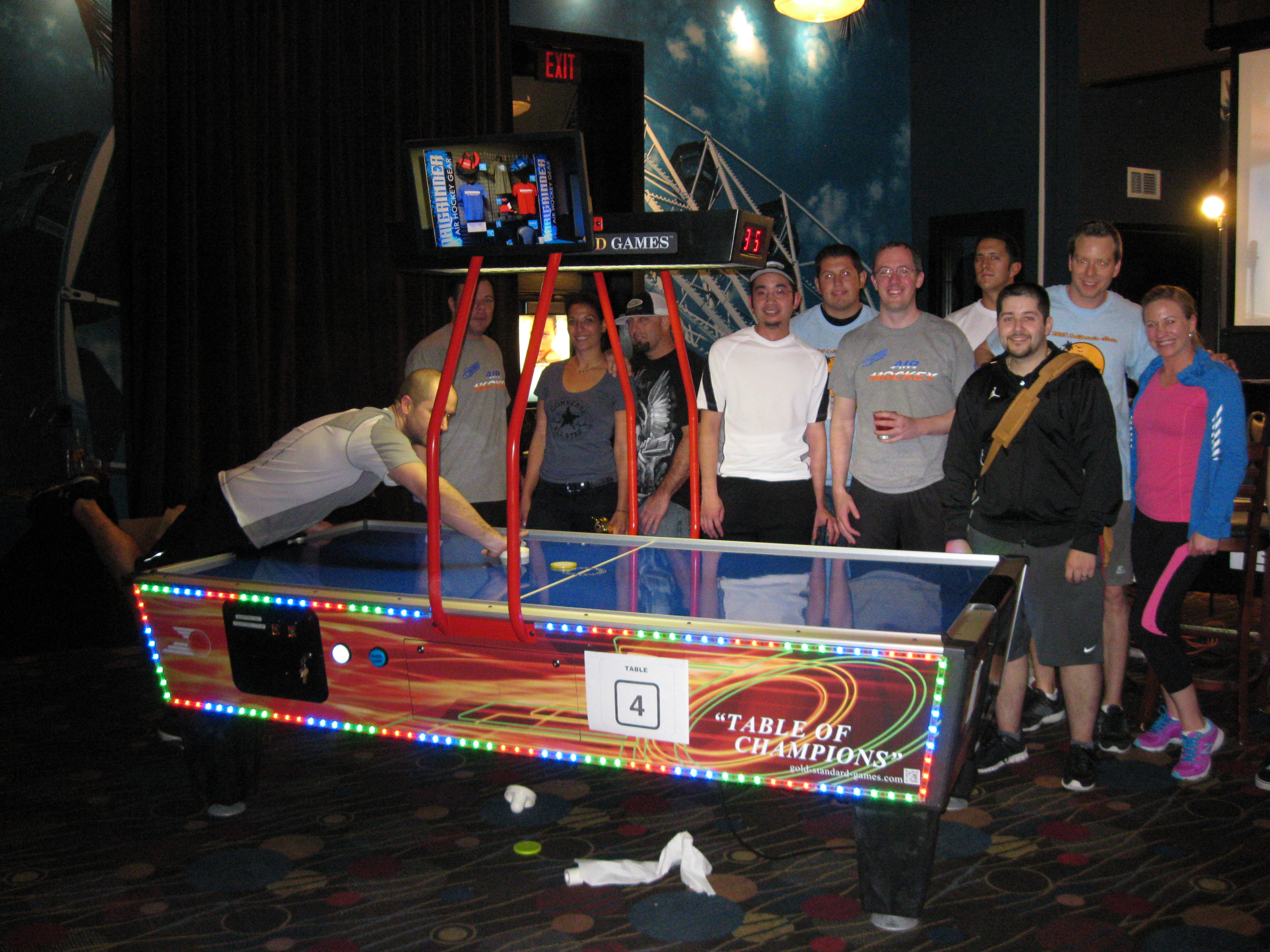
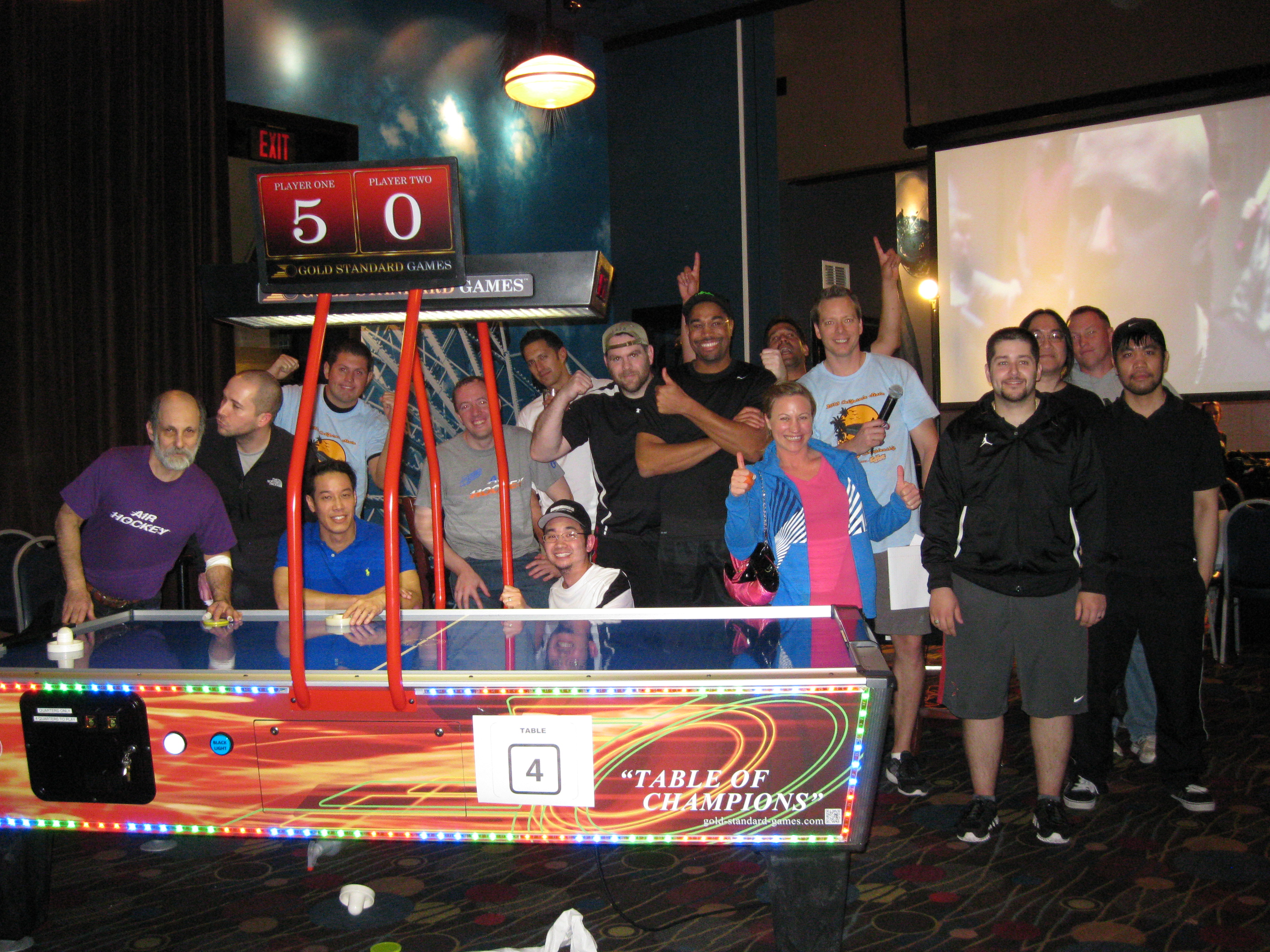
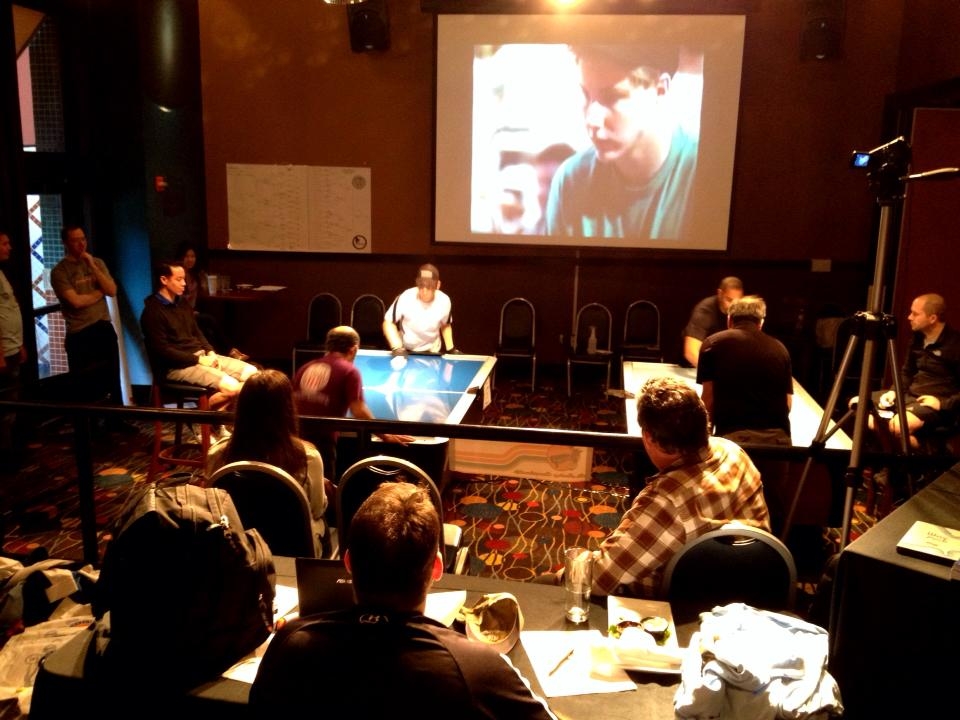
The 2013 California State Air Hockey Championships took place on February 23 at Dave & Busters in Irvine, CA. The event was sponsored by Gold Standard Games, Dave & Busters, Proairhockey.com, and several other businesses. Tournament organizers Cory Dzbinski and Kim Wenskay of Proairhockey.com were pleased with the response to their first state-level event. Media coverage included an extensive segment on San Diego Union-Tribune’s UT-TV.

Winning the tournament was current USAA World Champion Billy Stubbs of Chicago. Second place went to Davis Lee Huynh of Sunnyvale, CA, a 2-time World Champion. Joe Cain of San Ramon, CA was 3rd, followed by Donovan Brown of Houston, TX.

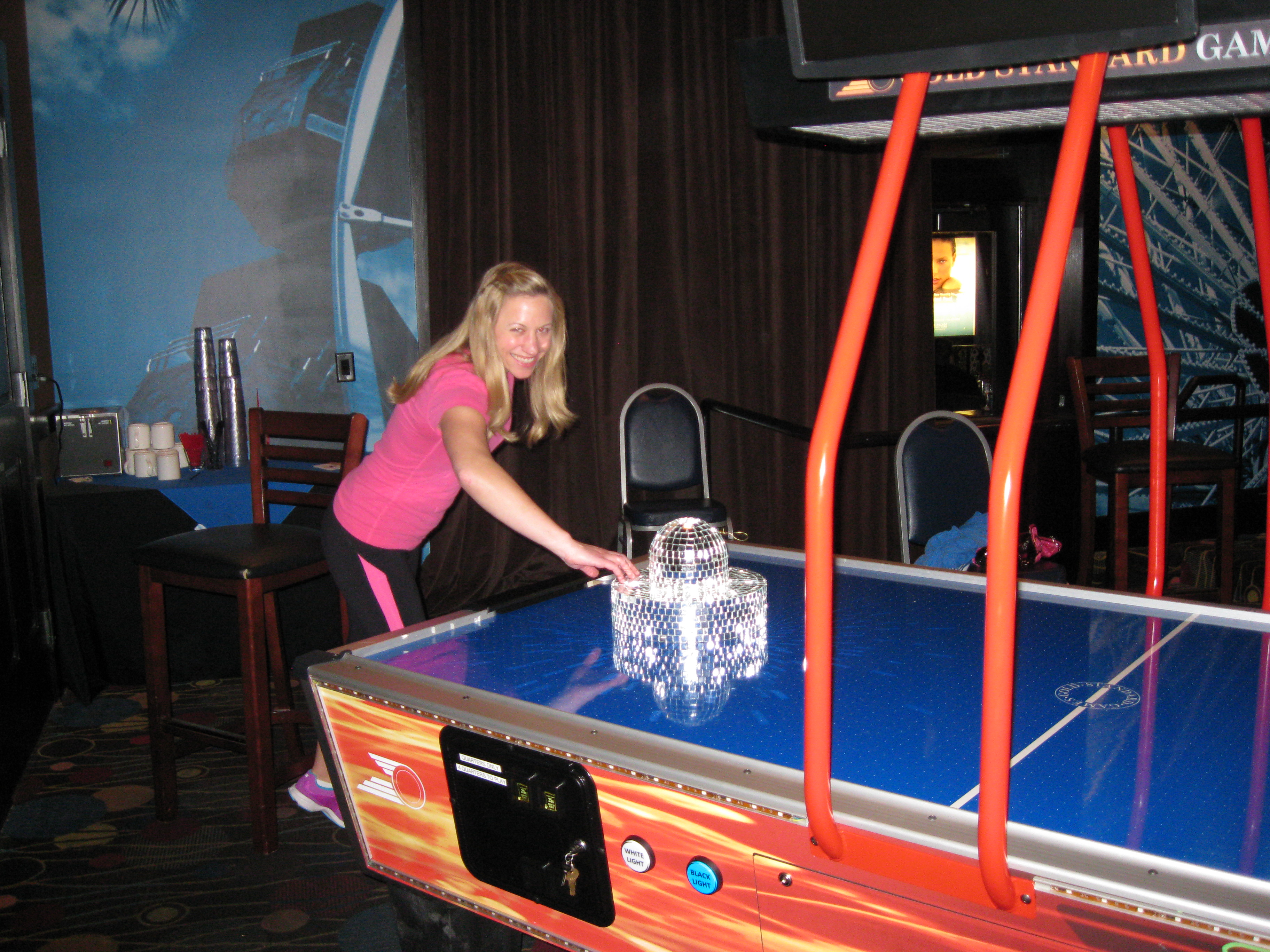
“The tournament was an opportunity to showcase a prototype of our new Premium FEC air hockey table”, said Gold Standard Games/Shelti owner Mark Robbins. “The response was great from both players and D&B personnel. And as expected, Dave & Busters was a first-class venue for such an event.”

Dave & Busters Marketing Manager Popeye Vasquez said: “What an awesome spectacle for our guests! Dave & Busters is proud to have hosted this year’s tournament. The quality of class and sportsmanship these players showed up with was nothing short of admirable…. And the new premium Gold Standard air hockey table was the talk of the tournament. One-of-a-kind, definitely the best table we’ve seen!”

John Kopchak, Amusement Manager for Dave & Busters Irvine, added: “We enjoyed hosting the tournament and look forward to hosting many more events in the future…. The Gold Standard table… is truly a quality piece and I would highly recommend it to anybody interested in buying such a table.”

Final results:

1. Billy Stubbs
2. Davis Lee
3. Joe Cain
4. Donovan Brown
5. Nick Geoffrey
6. Chris Lee
7. George Anderson
8. Mark Robbins
9. Lazaro Garcia
10. Cory Dzbinski
11. Kristian Urosovic
12. Tim Harshfield
13. Peter Cheung
14. Nicholas Del Gado
15. Kimberly Wenskay
16. Luis Alvarado
17. Olaa Cantwell
18. Tony Guzman
19. Nicholaus Velasquez
20. Emma Anderson
21. Sherman Davis
22. Lorenzo Marando
23. Allen Cheung
24. Warren Schultz

CAState2013CAState2013-1IMG_0443IMG_0447IMG_0450

Posted in Tournaments | Comments Off on 2013 CA State

Venezuelan Air Hockey

A Quick Look at Venezuela and Air Hockey
by Jacob Weissman

What do Hugo Chavez and Air Hockey have in common? Not much, except that both are making big news in Venezuela right now! Last month Caracas resident Pedro Otero flew up to Chicago and stripped the number one ranking, in the wonderful world of Air Hockey, from three-time world champion Billy Stubbs. Otero beat Stubbs four sets to two, twenty-one games to sixteen, a major upset in the eyes of the professional Air Hockey community.

This isn’t the first time Venezuela has caused quite an upset in the world of Air Hockey either! It all started in 1990, when several arcades began popping up across Venezuela, challenging a law established in the 70’s which banned all coin-operated games in the country. Then, in 1992, amongst political outrage, including police raids on arcades to confiscate what leaders saw as “brain-stealing machines,” the arcades fighting for survival across Venezuela culminated in the birth of La Ciudad de las Maquinitas, the first “large” arcade in Caracas, Venezuela’s capital. This arcade became the father of Venezuelan Air Hockey, pioneering the controversial, coin-operated, sport.

Following a letter of invitation to the 1993 Santa Cruz Nationals from the United States Air Hockey Association, La Ciudad de las Maquinitas even agreed to help finance a trip for two of their local players, Waedi Hassan and Argenis Montilla, who, despite not knowing an inkling of English, wished to attend the tournament. La Ciudad de las Maquinitas paid for 80% of the players expenses, obtained Visas and passports for the two, and even convinced a Venezuelan airline to sponsor the pair. Hassan and Montilla returned to Venezuela with the first and second place trophies in the Amateur Bracket, and, thus, professional Air Hockey in Venezuela was born.

Down the road a couple of years, in the fall of 1995, a young 17 year-old Venezuelan player named Jose Mora came to America to play. The event was the 1995 Internationals, held in Colorado, and, to everyone’s surprise, Jose took fifth. The American player base thought his finish was amazing, but most likely a fluke. Jose showed up three years later in 1998, making history yet again. He took first-place, and became the first person from a country, outside the U.S, to become the number one ranked player. Mora then came back to win again in 99’ and 2000, refusing to give the champion title back to American hands, until he finally succumbed to ten-time world champion Tim Weissman in the 2001 national championship, placing third.

Jose though, was not the only Venezuelan to make several outstanding finishes. Pedro Otero finished second in all three nationals Mora won, losing out to the Venezuelan champion each time. The very same Pedro Otero has yet again pushed Venezuelan Air Hockey into the lime-light, becoming not only the second Venezuelan to hold the number one U.S.A.A ranking, but also the second person from a country other than America to do so period.

The battle for first, however, will not be conceded by America so easily; come late April Pedro “the Eagle” Otero will face off against five Ultra-pro level American players in Houston, Texas, in defense of his number one ranking by the U.S.A.A. Pedro will play Ehab Shourky, Tim Weissman, and Danny Hynes, all three of them former World Champions with two, ten, and ten national wins under their belts, respectively. However, his challenge won’t end there. Pedro will also spar once again with three-time world champion Billy Stubbs, still considered by most in the Air Hockey community to be playing better than any other current player, and, this time, Stubbs is out for revenge.

What Pedro Otero is attempting is completely unprecedented in the sport of Air Hockey. He is planning, in the span of two weeks, to play, and hopefully beat the top four players in the sport, and in full length challenge matches no less. That means Pedro will be playing anywhere between 140 and 180 games in under fourteen days. Considering most of these games will be against, literally, the best players in the world, each and every one will take tremendous power, focus, determination, and strategy if Pedro hopes to win. This is a serious undertaking for “the Eagle”, both mentally and physically, especially when it is considered that those he plays near the end of his campaign will be “fresh”, while he will no doubt be tired and sore.
That being said, Pedro is determined. After finishing second for years, he wants to completely and utterly expunge the negative stigma of being “second.” Pedro wishes to prove he is number one, that he is just as good as Jose Mora, his fellow Venezuelan. This is certainly the way to do it, beating the best of the best all in a row, only days apart. Pedro is putting it all decisively on the line. Either he will be the best, or he will not.

So, as most of the world watches and waits to see what Chavez’s death will bring, those of us here in the Air Hockey world will be watching and waiting, to see what this epic clash of champions brings about. We will be waiting to see if a new era of Venezuelan dominance is upon us or, if America will take back her title again, as she did in 2001, and if, when all is said and done, Pedro Otero is number one or number two.

Posted in News | Comments Off on Venezuelan Air Hockey

Long Live the Pot Shot – By Billy Stubbs

I love pot shots. Scoring a no-drift forehand cut at 6-6 is about as sweet as it gets! In this article I cover the pros and cons of pot shots, the appropriate frequency of use and discuss specific examples. First a definition of what a pot shot is and is not:

What is a pot shot?
A pot shot is an unexpected shot that is taken earlier in the offensive cadence than normal and is usually executed away from the centerline. Pot shots can be planned or used opportunistically if the defense is out of position. A pot shot does not simply have a shortened release nor is it a desperation chase.

A basic pot shot is illustrated in the following sequence:

Normal shot

1) Still puck in back-right quadrant
2) Two second pause
3) Drift to centerline
4) Time delay
5) Right-wall-under

Pot shot

6) Still puck in back-right quadrant
7) Right-wall-under immediately executed with no pause, no drift and no time-delay

The pros and cons of using pot shots:

Pros

– They surprise and catch the defense unprepared
– Taking shots at various times strains the defensive player by forcing him to constantly focus
– Straights executed from further back sometimes have better angles
– Over banks executed from further back have more obtuse angles, which means a wider margin of error for over-the-mallets

Cons

– Higher degree of difficulty
– Taking shots from further back on the table gives the defense more time to react
– Under banks executed from further back have less acute angles, which means the defense does need to move as far to block them

Use in small doses
In my previous instructional articles I have advocated taking around 80-90% of shots from the centerline while using a controlled attack. Controlled shots executed at the centerline are normally more effective than pot shots because of a few reasons:

– Improved accuracy and consistency
– More acute angles on under banks
– Less reaction time for defense
– The defense is more likely to flinch

For players who primarily use a controlled attack at the centerline, pot shots can add another layer of deception, but only a handful per game should be used. Offense should consist of around 10-20% pot shots, which is a significant enough frequency of use that pot shots deserve a legitimate strategy, and some love.

Why pot shots work and upper limit frequency
Surprising the defense by breaking an established cadence is the most compelling reason to take a pot shot. Because of this, their use should not exceed 50%. When pots shots exceed 50% almost all of the unexpectedness is lost, which is equal to attempting more difficult shots with little to no benefit.

Pot shot opposites: Ehab Shoukry and Wil Upchurch
Master elite players normally shoot between 10-20% pot shots. Wil Upchurch and Ehab Shoukry are both top-5 rated players with great offenses; they are also on different ends of the pot shot spectrum. Wil has one of the quickest paced offenses of all time and routinely uses pot shots as part of his deranged attacks. On the other hand, Ehab has one of the most controlled offenses. He relies on precision, power and gains deception from his releases while he executes almost all of his shots from a planned and controlled drift.

At the 2012 Houston World Championships, these two players met in a clash of styles during the winners’ bracket round of 8:

http://vimeo.com/47166540

Here is a breakdown of the frequency of pot shots in this match:

Wil – 99 total shots/34 pots shots: 34% pot shots
Ehab – 95 total shots/12 pots shots: 12% pot shots

Wil has the best pot shots in the history of air hockey, yet he only executed them 34% of the time, well below 50%. Wil understands that surprise is crucial to their effectiveness.

What can be learned from Ehab’s meager 12% usage? It is clear that even the most controlled attacks benefit from using pot shots. Ehab’s pot shots were actually more effective than Wil’s based on the success rate of pot shots attempted. This is largely due to Ehab’s infrequent use of them, which will increase their success rate when he does shoot pot shots.

A deeper look at Wil and Ehab
Below are four short clips of standout pot shots from Ehab and Wil’s match along with my analysis:

http://vimeo.com/59962878
Ehab executes a normal left-wall-over, then a chase cut and pot shot right-wall-under. The pot shot in this instance can be more specifically defined as a one-two. This sequence works because Ehab generally catches the puck and resets before drifting. It is especially effective because the chase cut produces momentary chaos; Ehab capitalizes on this with an immediate pot shot.

http://vimeo.com/59962880
After Ehab attempts a normal off-speed cut, he has multiple options:

– Grab the puck, establish control, drift the puck, then execute a shot
– Drift the puck without establishing control, then execute a shot
– Execute a pot shot

Ehab elects to hit a pot shot after circling around the puck. The circling movement causes Wil to think that Ehab is going to grab the puck and reset. Ehab capitalizes on Wil’s lapse of focus by sinking a textbook pot shot left-wall-under.

http://vimeo.com/59962881
After a successful charge, Wil grabs the puck at the centerline, which leaves the puck in a still position for a fraction of a second. He then quickly transitions into a right-wall-over. I use the term stop-and-go to define this sequence. The stop-and-go pot shot causes Ehab to overreact to the bank. This happens because Wil normally drifts after grabbing the puck.

http://vimeo.com/59962882
This sequence is sick! Only Wil can pot shot a forehand left-wall-over and follow it with a one-two left-wall-under smash at the rail.

Additional frequencies
Pot shot percentages by other Masters:

Danny Hynes vs. Billy Stubbs: 2013 Houston City Open: finals, second set
http://vimeo.com/album/2028316/video/47142248
Danny – 192 total shots/35 pots shots: 18% pot shots
Billy – 173 total shots/21 pots shots: 12% pot shots

Danny Hynes vs. Billy Stubbs: 2012 Houston Worlds: losers’ bracket, loser to 5/6
http://vimeo.com/album/2240087/video/58463906
Danny – 75 total shots/8 pots shots: 11% pot shots
Billy – 63 total shots/5 pots shots: 8% pot shots

Davis Lee vs. Tim Weissman: 2012 Houston Worlds: winners’ bracket round of 4
http://vimeo.com/album/2028316/video/47859582
Davis – 174 total shots/14 pots shots: 8% pot shots
Tim – 183 total shots/19 pots shots: 10% pot shots

Brian Accrocco vs. Keith Fletcher: 2012 Houston Worlds: 9/12 spin-off finals
http://vimeo.com/album/2028316/video/47142246
Brian – 124 total shots/15 pots shots: 12% pot shots
Keith – 110 total shots/11 pots shots: 10% pot shots

How to develop pot shots
Player of all skill levels should execute between 10-20% pot shots. Straying from this range is usually symptom of an overly conservative or reckless offense. Mimicking and studying top players’ pot shots, like the ones in the above videos, is a good starting point for amateurs. Pros and above should be spontaneous and develop novel pot shots through experimentation. The exact frequency of use does not need to be known during a match while in the heat of battle. Once a player is aware of the appropriate frequency, a feel for what is correct will develop over time.

Posted in Tips from the Pros | Comments Off on Long Live the Pot Shot – By Billy Stubbs

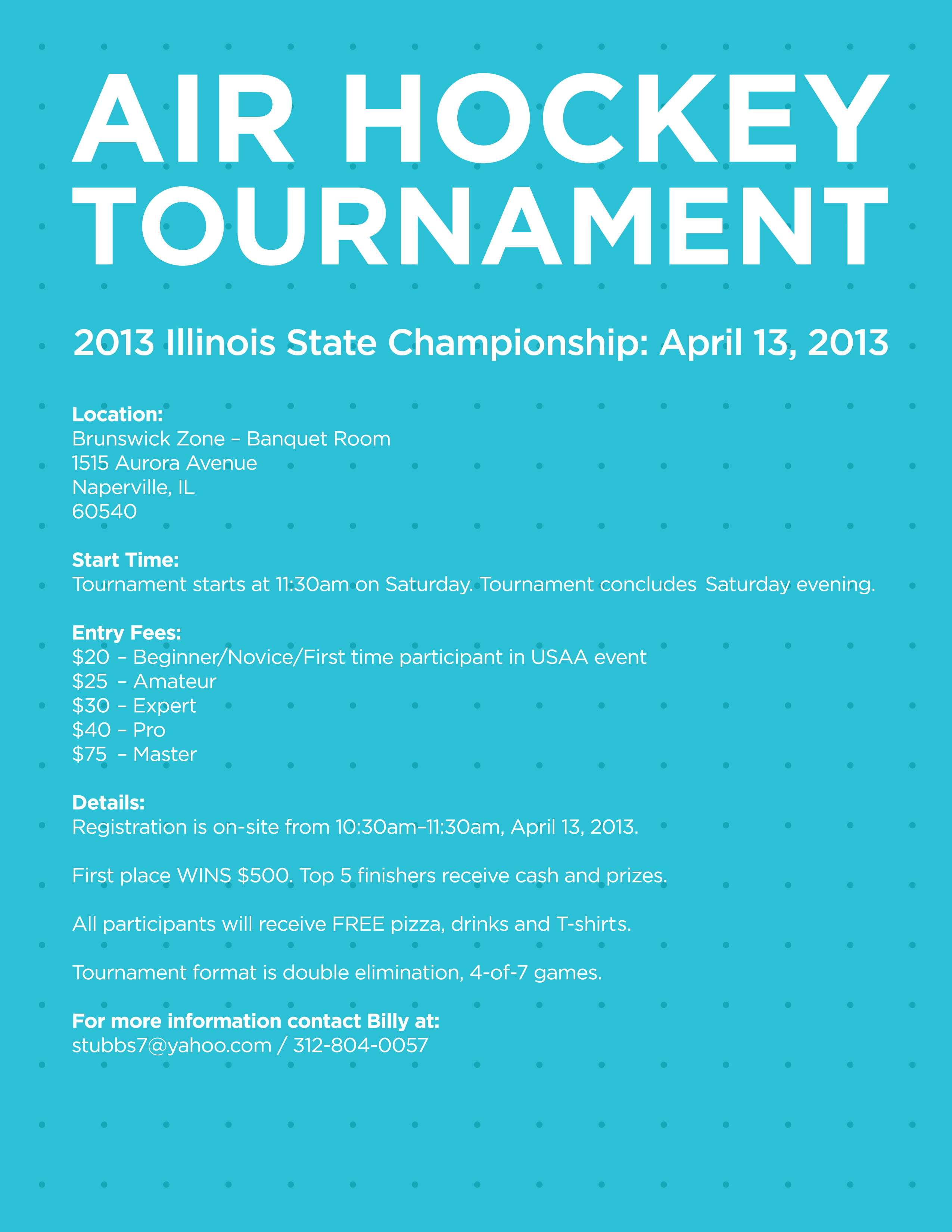
2013 Illinois State Tournament Announced!

il_state_2013 il_state_12

Posted in News, Tournaments | Comments Off on 2013 Illinois State Tournament Announced!

2013 CA State Tournament Just Around the Corner!

2013CalState

Registration and Information  at http://www.proairhhockey.com 

Posted in News, Tournaments | Comments Off on 2013 CA State Tournament Just Around the Corner!

#9 Keith Fletcher (CO) vs. #1 Billy Stubbs (IL)

Posted in Match Videos, Videos | Tagged , | Comments Off on #9 Keith Fletcher (CO) vs. #1 Billy Stubbs (IL)

Rise of the Young Wolf Videos

Posted in News | Tagged , | Comments Off on Rise of the Young Wolf Videos

First Production Tables!

This gallery contains 6 photos.

More Galleries

Welcome

Welcome to Gold Standard Air Hockey!

Posted in News | Comments Off on Welcome